
Content Waves
Content Waves are a strategic approach to content marketing that focuses on creating and distributing valuable, relevant, and consistent content to attract and retain a clearly defined audience.
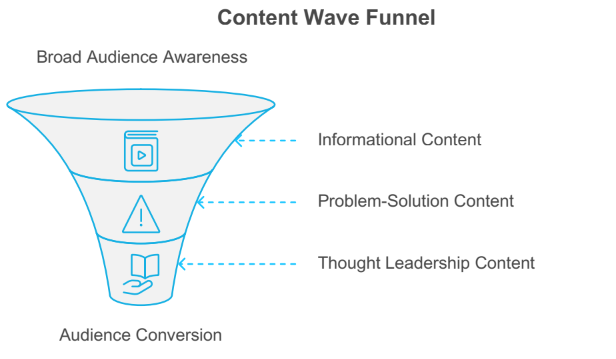
This method aims to drive profitable customer action by guiding potential customers through different stages of the buyer's journey.
By implementing Content Waves, businesses can effectively engage their target audience, build brand awareness, and convert leads into loyal customers.
Content Wave Funnel
1. Informational - Education / Awareness
This is typically the first touchpoint a potential customer has with your brand. The content in this wave should be broad and accessible, designed to attract as wide an audience as possible within your target market. It's about making people aware that your brand exists and what general area you operate in.
This wave focuses on introducing your brand, products, or services to a broad audience. The primary goal is to educate potential customers about your offerings and establish your presence in the market. Content in this wave should be easily digestible, engaging, and shareable to maximize reach.
Examples
For example, if you're a fitness app, you might create content about general health and wellness topics. The goal isn't to sell directly, but to become a trusted source of information in your field. This builds brand recognition and starts to establish trust with your audience.
- Blog posts explaining industry basics or trends
- Infographics summarizing key statistics in your field
- Short, entertaining social media videos introducing your brand story
- Podcast episodes discussing broad topics related to your industry
- "What is" or "How to" guides relevant to your products or services
2. IRL Pain Points & Solutions / Consideration
Once people are aware of your brand, this wave helps them understand how you can solve their specific problems. The content here should be more detailed and practical, demonstrating your expertise and the effectiveness of your solutions.
This wave addresses specific problems your target audience faces and demonstrates how your products or services can solve these issues. The content should be more detailed and practical, helping potential customers understand the value you offer.
Examples
Using the fitness app example, you might create content about how to overcome specific fitness challenges, with your app featured as one of the solutions. This helps potential customers see the real-world application of your product or service.
- Case studies showing how your product solved a customer's problem
- Comparison guides of different solutions (including yours)
- Webinars demonstrating how to address common industry challenges
- In-depth blog posts or whitepapers on problem-solving strategies
- Video tutorials showing your product in action
3. Thought Leadership & Sales Support / Decision
This wave aims to solidify your brand as the best choice for your potential customers. It includes content that showcases your expertise, builds trust, and provides the final push towards a purchase decision. This wave also focuses on maintaining relationships with existing customers and enhancing your overall brand reputation.
This wave is about cementing your position as the best choice for your customers. It includes direct sales support content, but also goes beyond that to establish your brand as a leader in your field.
Examples
Continuing with the fitness app example, this might include detailed comparisons with other fitness apps, success stories from users who have achieved their goals with your app, and thought leadership pieces about the future of fitness technology. It could also include PR efforts, like highlighting your app's involvement in a charity fitness challenge.
- Customer testimonials and success stories
- Detailed product demos and comparisons
- Thought leadership articles by company executives
- Interactive ROI calculators
- Behind-the-scenes content showing your company culture
- Press releases about company achievements or initiatives
Content Wave Sections
Goals & Guidelines
This section outlines the overarching objectives and key principles for creating content within each wave of the funnel. It provides a framework to ensure that all content aligns with the brand's messaging, meets audience needs, and supports overall marketing goals. Guidelines may include tone of voice, content formats, key performance indicators (KPIs), and best practices for each stage of the funnel.
Topic Selection
When thinking about finding an authoritative topic, it's crucial to balance what search engines value and what your audience finds genuinely useful. The key is identifying topics where your brand's expertise intersects with your audience's needs and search behavior.
When thinking about finding an authoritative topic, it's crucial to balance what search engines value and what your audience finds genuinely useful. The key is identifying topics where your brand's expertise intersects with your audience's needs and search behavior.
Start by thoroughly understanding your brand's core competencies and unique insights. Then, dive deep into your audience's pain points and their questions online. Use keyword research tools to identify high-potential topics, but don't just chase high search volumes. Look for topics where you can provide substantial value and potentially become the go-to resource.
Consider the search intent behind keywords. Are users looking for quick answers, in-depth guides, or product comparisons? Ensure your content matches this intent while showcasing your brand's expertise.
Don't be afraid to tackle complex topics or create comprehensive resources. These often have the potential to earn backlinks and establish your site as an authority. However, always ensure the content is accessible and valuable to your target audience.
Remember that authority is built over time. Consistently producing high-quality, relevant content on your chosen topics will gradually establish your brand as a thought leader in your niche, benefiting both your SEO efforts and audience engagement.
Content Structure
When structuring your content, it's essential to create a logical flow that guides your audience through your message. Start with a compelling introduction that hooks the reader and clearly states the purpose of your content. Break down complex topics into digestible sections, using subheadings to improve readability and navigation. Incorporate a mix of text, visuals, and interactive elements to cater to different learning styles and maintain engagement throughout the piece.
 Made with Bullet